
2026 • ATO RECORDS • INDIE ROCK
92/100
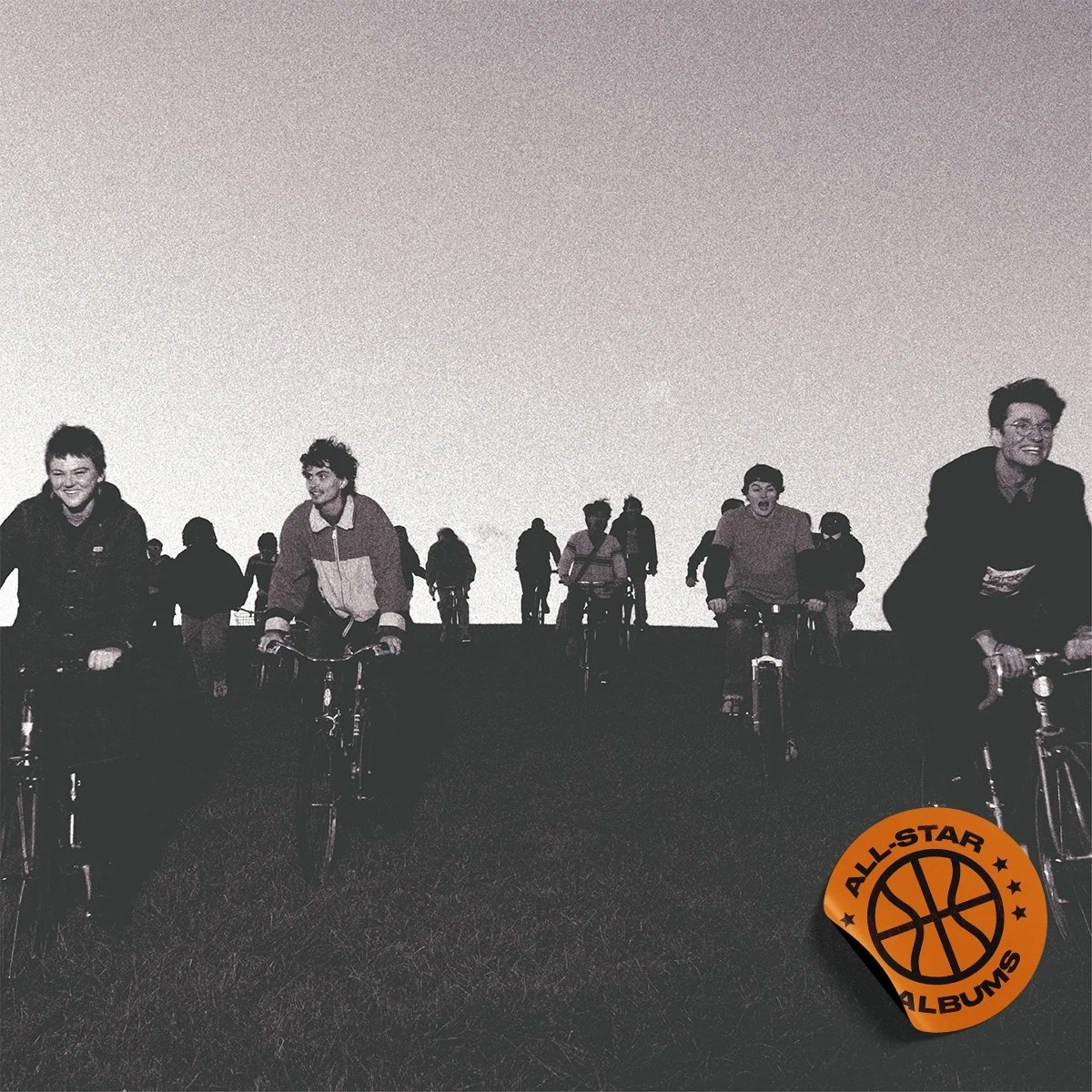
Friko operates on a signature depth that swings from the gentle to the rocky to the unhinged, before snapping back into the norm. On their debut, they shouted from a dark room; on Something Worth Waiting For, they are earnest navigators expressing awakening joy in an industry where the algorithms outvote the anthems. For those who treated the debut like an emotional safety blanket, this record is a relief. It is a work of high-altitude navigation where the insularity of the flat is traded for the resonance of the open road.
On "Guess," the band swats away past ruminations in exchange for a more direct connection, leaning into the idea that staying close is the only way to survive life’s complexities. It is the antithesis to "Get Numb To It" from the debut. Where that track advised numbness as a shield against escalating darkness, the song now demands clarity: “Don’t make me guess / If that’s a cry or a laugh.” It weighs duds and gaffs against a world that rarely provides enough for happiness. When the guitars land, they lean into a heavy metal drift that carries the "ha-ha-ha" vocals along for the ride. It’s a perfect example of that pendulum swing between a quiet breakdown and sonic collapse. "Just being enough" is the central theme here, even if the result is a fail.
"Still Around" follows with a kickdrum that mimics an excited heartbeat; a plant-flagging song for the exhausted. While the debut navigated self-doubt and suicidal ideation, this is a declaration of presence. The track hits a feverish vocal run that sounds like it's coming up for air. Hearing the refrain “Still around” repeated is a new dawn ditty telling the world you’re back to bust some balls.
The rhythm then accelerates for "Choo Choo," a manic dream of escaping on the rail line. The guitars start in a steady, early-Oasis type riff before reaching a sudden, high-velocity breeze as the track whizzes by. It captures the sensation of standing on the back of a rail car, positioned in the open air while the world blurs. The song hits a propulsive velocity reminiscent of The Japandroids, where the melodic foundation is pushed until it threatens to derail. The band leans into the mystique of a joy ride, interjecting rhythmic "ch-ch-ch" noises and "CHOO CHOO" shouts that mimic the engine's pulse. The guitars take on a bright, metallic clatter as thoughts move at the speed of the train.
The "do I deserve to be here" energy is explored most deeply in "Alice." Here, the band doubles down on the Chicago-to-LA transition using Alice in Wonderland as a metaphor for the imposter syndrome that comes with fitting raw basement energy into the professional studio of John Congleton. Having navigated the jagged textures of St. Vincent, Sleater-Kinney, and Conor Oberst, Congleton provides a room where the ceiling is higher and the gear is superior, leaving the band to wonder if they belong in the garden or if they’re just trespassing. Alice is always too big for the house or too small for the key, reflecting that constant renegotiation of self-worth when the stage gets bigger. The rabbit is a pawn introducing anxiety into the dream, embodying the fear of a professional gaff in a high-stakes room. The strategy is to stop staring into a distorted mirror and instead trust the perspective gained from looking to the landscapes beyond.
"Certainty" and "Hot Air Balloon" function as a pairing of anxiety and the need for release. In "Certainty," a dream sequence of jumping sidewalk lines and spotting the Red Line hits a peak of marble-mouthed tension, the song lamenting that it “wasn’t in winter three months ago / but it feels like it now.” The disorientation mounts until the strings swell and a whisper admits, “I’m breathing.” That breath, and the chamber qualities of the track, acts as the valve release for the escapist journey of "Hot Air Balloon." Here, the band leans into a deep weariness regarding the "discotheques and debt" of city life: “I don’t want none of it no... I just wanna sit below the hot air balloon.” It’s a pursuit of vertical peace; gaining perspective as you gain distance from the frenzy of the world. The rising scales of the bridge make you feel like you’re reaching peak height.
"Seven Degrees" flips the Kevin Bacon theory into a Chicago-fied UK pub-tune, an anthemic swell that looks back at their roots as the horizon expands. Between "assholes in disguise" and friends who broke a heart, the song longs to find its people among the seven souls in line.
The title track arrives as the record's long-haul payoff, representing a connection found in the resonance through a sprawling, six-minute waypoint that builds from a surreal image of laying statues in the dirt to a hectic vocal round. As the lyrics run circles until we finally see each other, the guitars grow in dense, noisy layers and shouted call-and-response vocals act like bright brush strokes on a gray canvas; a group effort to outrun despair that connects the dots of escapism. This intensity makes the subsequent "Dear Bicycle" feel like a hidden bonus track found after a minute of silence on a dusty CD, a gentle reprieve from the record's most concussive peaks. It’s a love song to simplicity where riding in your own hooptie provides the ultimate comfort, ending the journey on two rusty wheels in an alley as the track personifies a Midwest bike’s plausible griefs: “I know you’re scared, the ice is fucking everywhere.” The paths may be curved, but the future for this newly expanded four-piece is an exciting one for a generation turning inward wanting to be ok in the outward.
NBA COMP: JARED MCCAIN
Jared McCain is an emotional dynamo on and off the court, a TikTok star with a wet jumper and a big heart looking for his spot in a league. In Philly, he was a rookie-of-the-year frontrunner whose first season was nullified by injury and the arrival of VJ Edgecombe. He was a player trying to find a pure rhythm in an unforgiving system that spent 15 years "trusting the process", taking one step forward and two steps back in the hopes that tomorrow brings three.
Then came the trade to OKC, where Mark Daigneault became his John Congleton, providing a space that prizes raw character over sterile perfection. Just as capable of making vocal runs as he is showing off fluid handles and point streaks, McCain found a coach who allows the roster to be their authentic selves. He has stopped looking at the distorted expectations of a franchise trading veteran bones for fresh legs and started trusting his own line of sight. Much like the transition found on "Still Around," his play is the unmistakable sound of a prospect finally finding his second wind.